Every piece of technology in your business follows a clear path. This is known as the IT equipment lifecycle. It starts when equipment is purchased and ends when it is retired, reused, or recycled. Understanding this lifecycle helps businesses save money, improve security, and reduce waste. It also ensures that data is handled safely at every stage.
Below are the stages that every piece of IT equipment goes through in its lifetime:
Stage 1: Purchase and Setup
The lifecycle begins when new equipment is selected and installed. This includes computers, servers, printers, and network systems.
At this stage, businesses focus on performance and productivity. Getting the highest quality equipment that runs the best software to fit the needs of the business. Devices are configured and deployed for daily use.

Stage 2: Active Use
During this stage, equipment supports daily business operations. This includes running your day-to-day workload through this different equipment. The equipment stores data, runs applications, and connects teams.
Over time, systems may slow down or become outdated. This is often when businesses start planning upgrades.
Stage 3: Upgrade Planning
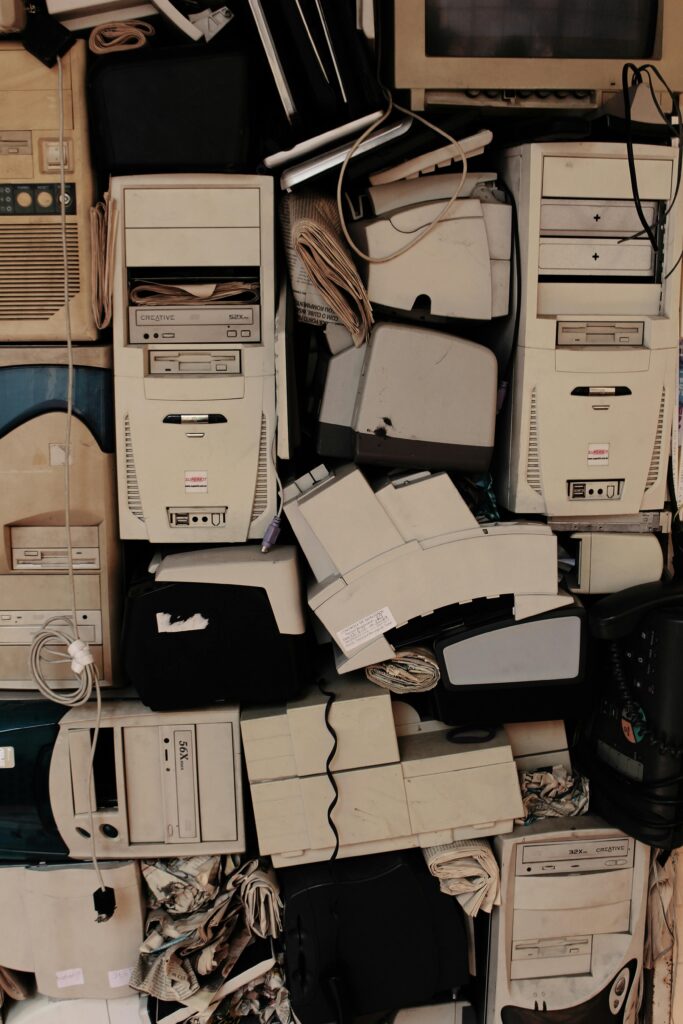
Eventually, older equipment becomes obsolete. It no longer meets the business performance or security needs, and upgrades are scheduled.
However, old equipment still contains value and data. It should not be ignored or stored without a plan.
Stage 4: End-of-Life Management
This is the most important stage of the lifecycle. ALL equipment must be handled properly to ensure that sensitive data is protected and to recover value from the initial investment.
These stages include IT asset recovery, certified data destruction, and responsible recycling.
Proper handling reduces risk and supports business sustainability goals. That’s where we come in. At DN Eco, we specialize in end-of-life equipment management – making the transition from obsolete to new equipment seamless and secure.
Why the Lifecycle Matters
When businesses manage the full IT equipment lifecycle, they reduce security risks, control costs, and operate more efficiently.
Learn Moreabout how DN Eco Solutions helps organizations manage the final stage safely and responsibly.